Turning a fragmented donor workflow into a testable product system
Mylyn Labs needed a credible way to show how an Organ Procurement Organization could capture a referral, organize the case, trace findings to source evidence, coordinate work, and see performance in one environment. I owned the product specifications and led the hands-on prototype effort.
Proof boundary: The prototype and screenshots use synthetic sample data. This case study documents a working product and market-learning artifact—not a clinical deployment or measured clinical outcome.
The Challenge
Organ procurement teams make time-sensitive decisions from information distributed across records, calls, notes, labs, imaging, and operational systems. The resulting manual review and duplicated work make it harder to assemble a coherent case picture while the clock is already running.
The product had to reduce information-gathering friction while keeping the evidence visible and the experts accountable. An early prototype could help people inspect the workflow, but it could not be allowed to imply that software was making clinical decisions.
The Opportunity
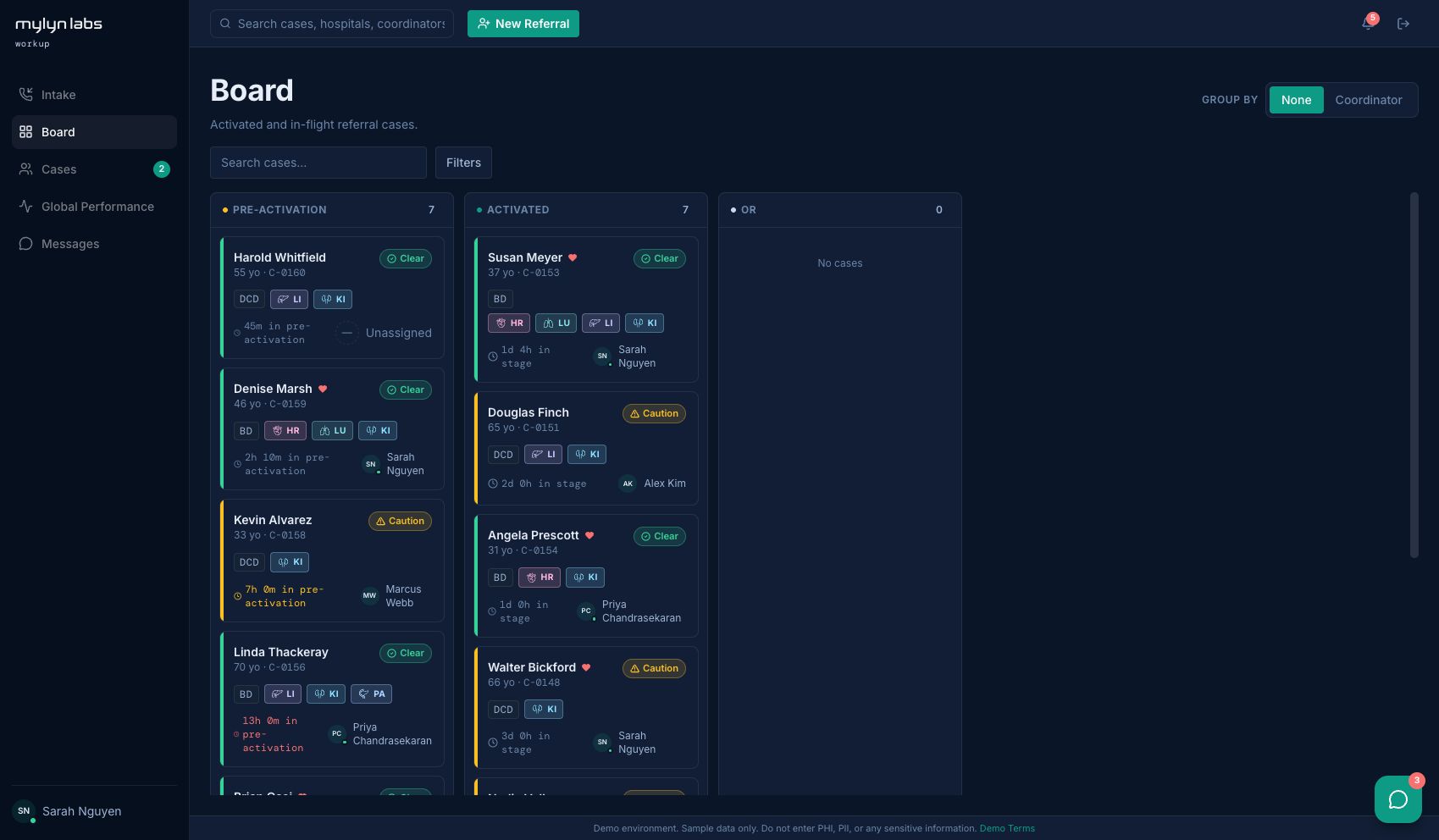
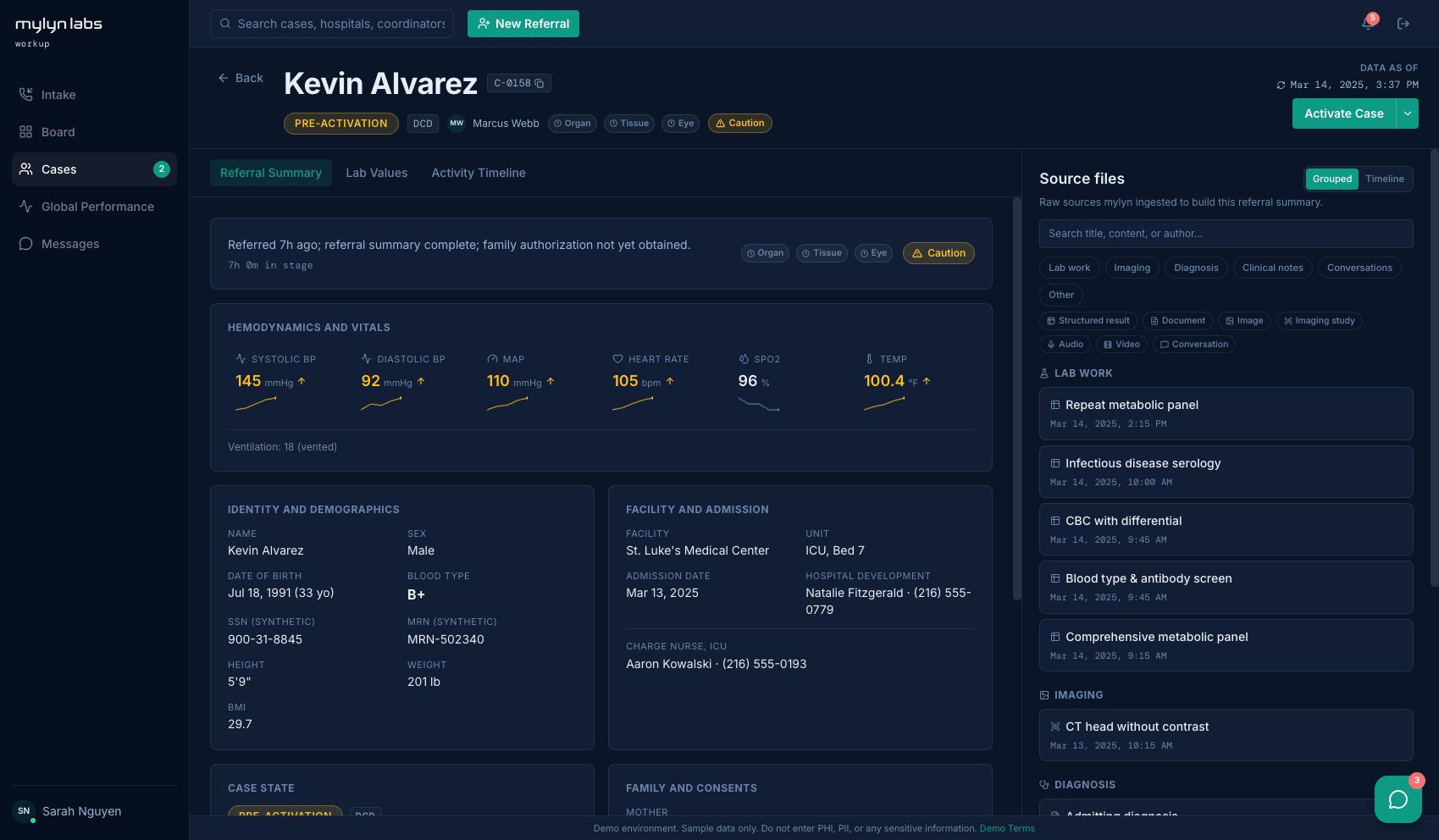
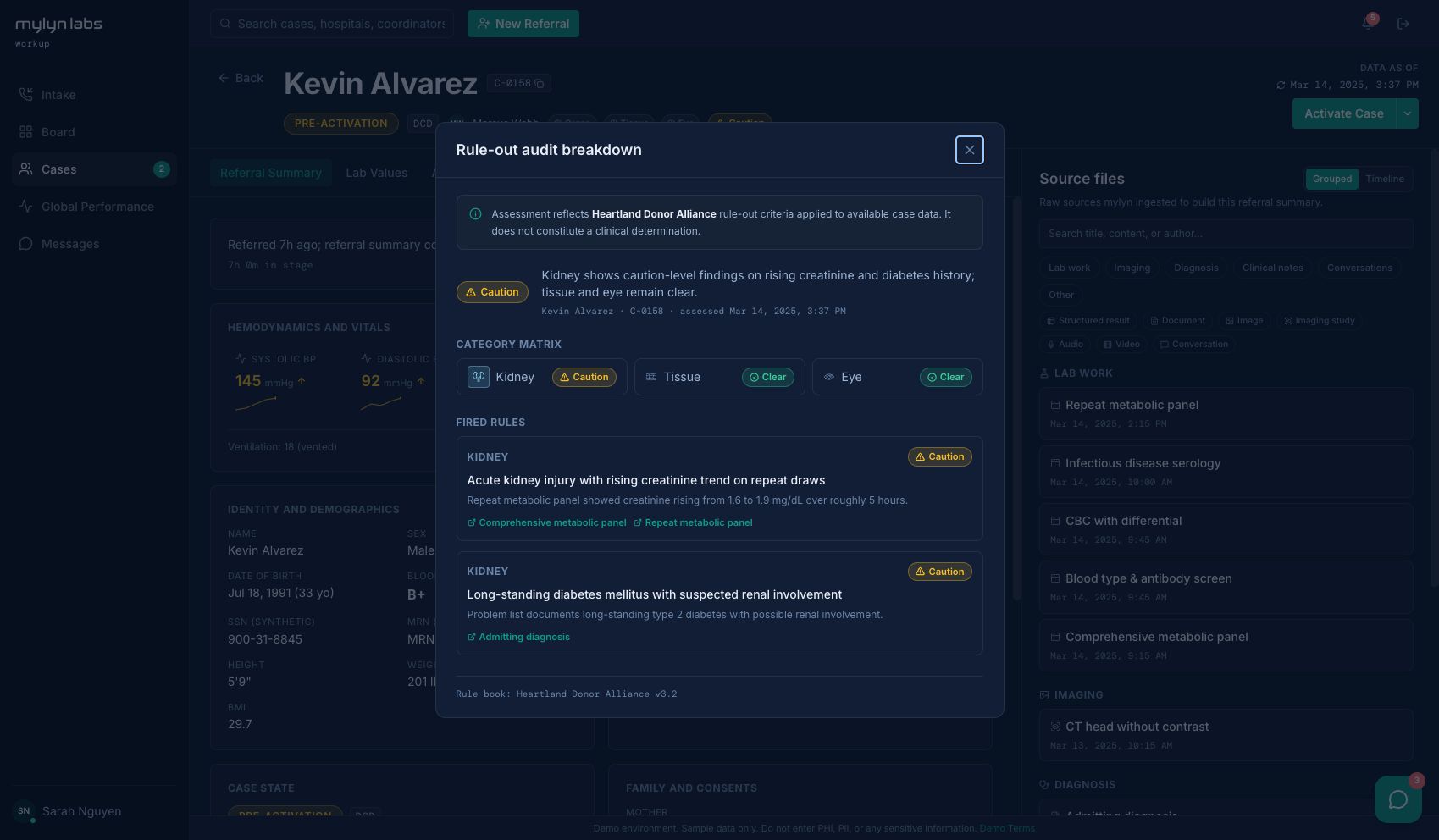
I framed Mylyn Workup as a pre-activation layer between hospital-side information and the systems an OPO already uses. The prototype would give experts something concrete to challenge: intake, a shared work board, a source-backed case workspace, an auditable rule-out concept, case-linked communication, and a performance view.
That made the product vision testable before the company invested in production integrations or claimed savings, adoption, or clinical impact.
What I Did
As Mylyn Labs’ Head of Product and Co-Founder, I owned the product specifications defining the prototype’s workflows, language, interaction behavior, data model, and acceptance criteria. I translated domain input into a product model spanning referral intake, the operating board, case registry, source-backed summaries, lab trends, activity history, messaging, and synthetic performance reporting.
One consequential product decision was removing an unvalidated predictive viability score. I replaced it with a deterministic rule-out concept that attributes criteria to the organization’s own rule book and links each finding to its supporting source record.
I also connected the demo to a controlled evaluation path and later added a public portfolio route that enters the synthetic experience without a shared password or backend account.
The Results
In the located repository history, the first prototype commit is dated July 8, 2026. By July 21, the demo had become a responsive, multi-module product spanning the major workflow and reporting concepts. The account-based demo, request flow, and browser-local public guest route were live and reachable by September 3.
- A coherent workflow model experts and prospective customers can inspect.
- Source-backed summaries and rule-out findings designed for auditability.
- A live synthetic prototype that separates demonstrated product capability from unproven clinical or business impact.
No clinical deployment, adoption metric, time saving, cost saving, donation-rate change, or revenue result is claimed here. The work was collaborative; this account describes Nick’s verified product ownership and delivery leadership.