Turning a dental bottleneck into a testable automation roadmap
Premier Dentistry wanted to become more efficient before adding volume. I mapped the administrative problem space, prioritized the opportunities, and began with a constrained insurance-intake prototype that kept consequential decisions in human hands.
Privacy boundary: No patient information or live client-system data appears here, and the prototype was local and demo-only. This story does not claim deployment, staff adoption, time saved, revenue, or ROI.
The Challenge
Essential administrative work was fragmented across reports, appointment searches, patient records, payer workflows, handwritten forms, scans, and repeated data entry. Insurance verification stood out as a major qualitative burden for the front desk, but the engagement had not yet established a measured time baseline.
Automation carried real risk. Insurance terms affect estimates and collections, patient-supplied details do not prove active eligibility, and desired conditions are not always supported natively by practice software.
The Opportunity
The opportunity was to turn a broad request for “AI enablement” into practical, measurable interventions. Discovery surfaced 12 opportunities across reporting, appointment search, information collection, work queues, insurance intake, daily readiness, exceptions, measurement, and scheduling support.
The roadmap separated low-risk quick wins from workflows requiring deeper validation, stronger permissions, or continued human judgment. It also made baseline measurement part of the work.
What I Did
As the practice’s AI enablement consultant, I mapped the people, workflows, systems, decisions, and constraints behind the visible friction. I presented options and tradeoffs, then began executing in highest-leverage, lowest-cost order.
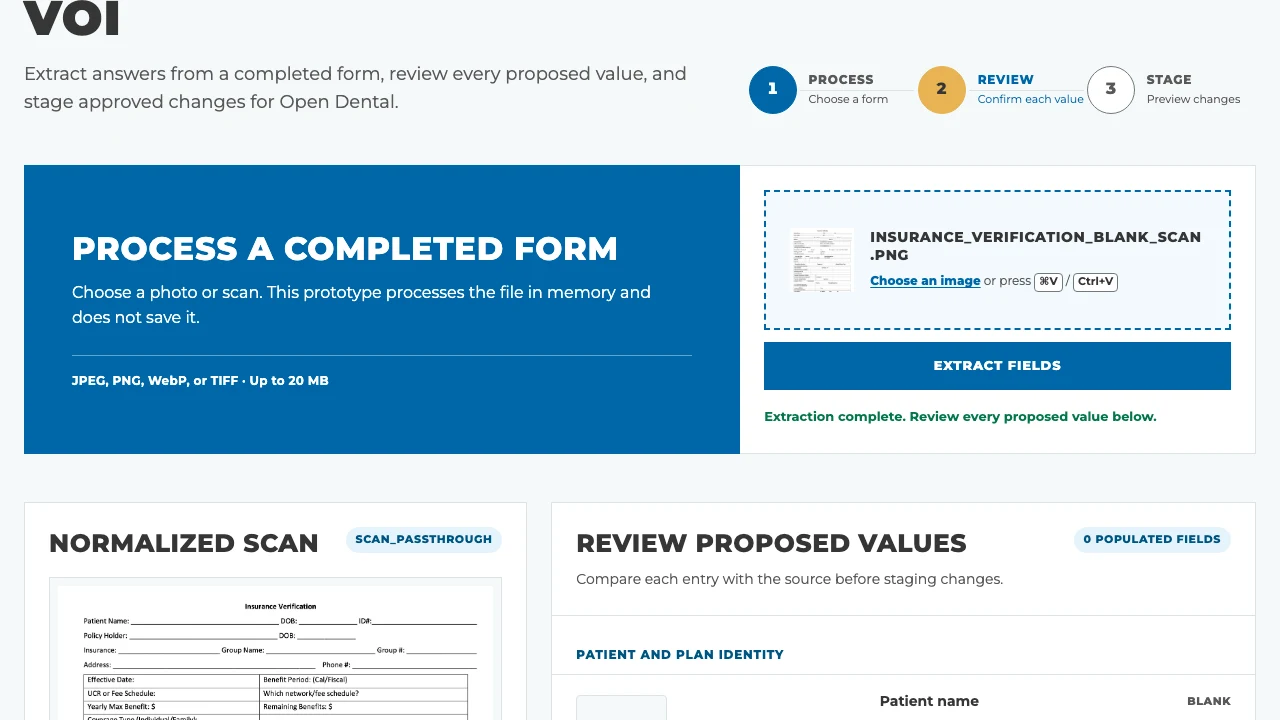
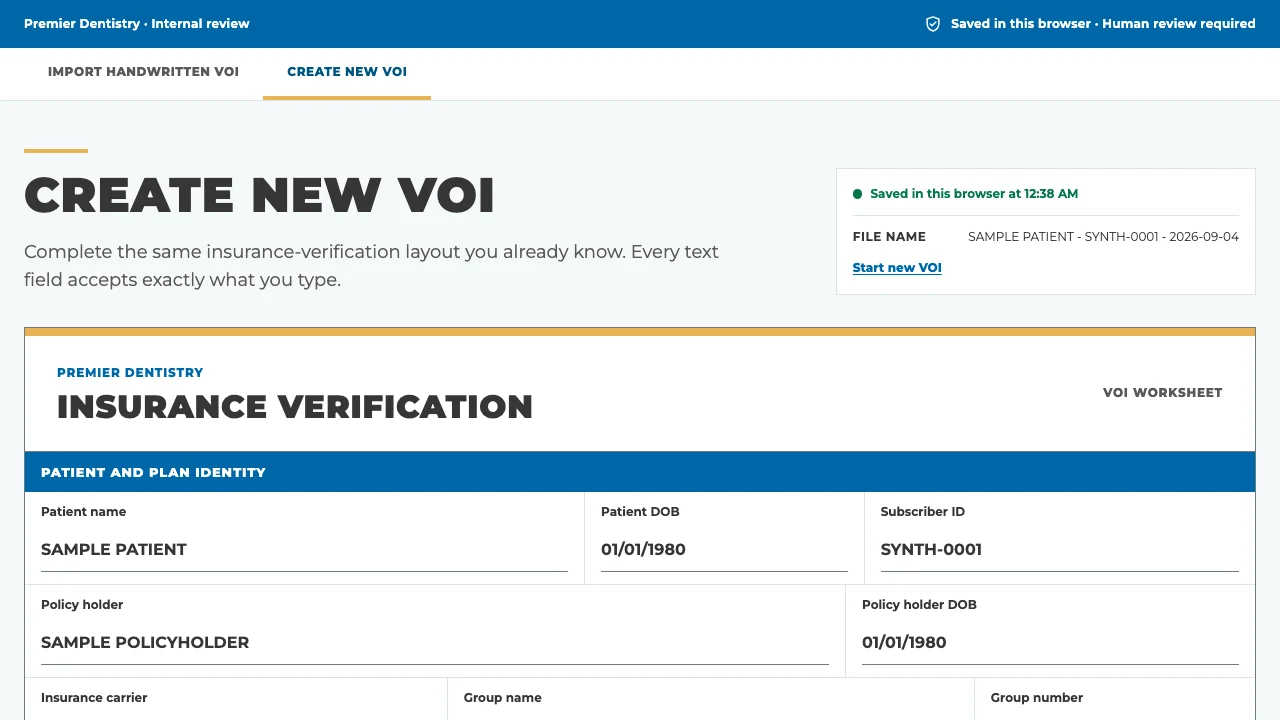
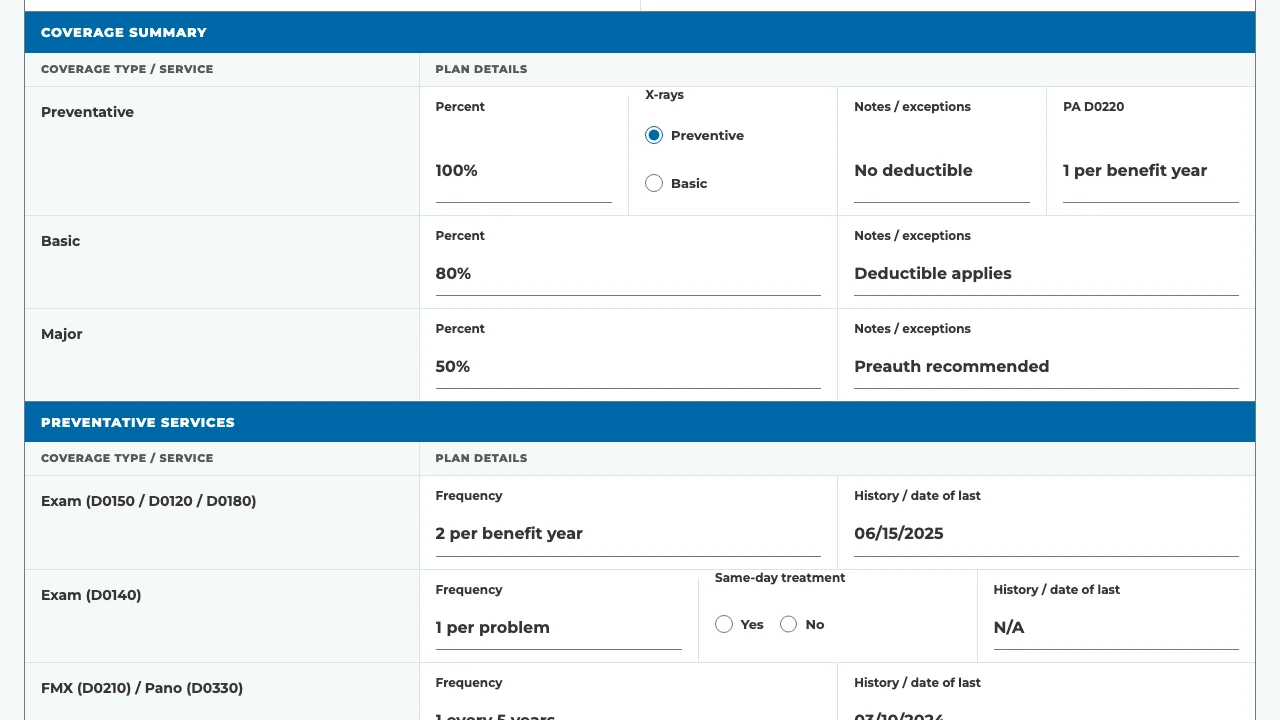
The work moved into a constrained insurance-verification prototype. It mapped 90 fields across six sections, presented every extracted value for human review, and prevented uncertain or invalid values from being staged.
Safety controls were product behavior, not documentation: images processed in memory, empty mappings until confirmation, writes disabled by default, allowlisted targets, expiring staged bundles, reviewer matching, extra confirmation for shared-plan changes, and demo-only write restrictions.
The Results
The verified result is a decision-ready foundation rather than a production impact claim.
- A prioritized 12-opportunity roadmap and staged implementation sequence.
- A cited integration-feasibility study exposing a decisive vendor question before implementation.
- A calibrated 90-field model and working, safety-gated prototype with 21 passing tests.
The next proof point is a controlled pilot with approved access, baseline measures, and post-launch evidence.
All interface examples use synthetic or blank data. No patient information, live-system data, production deployment, or measured business outcome is shown or claimed.