Turning claims queues into explainable, human-controlled action
I turned a detailed auto-insurance operating scenario into a focused product strategy and working prototype for routing ready work, exposing blockers, and assembling source-grounded claim context.
The Challenge
The operating model covered a high-volume commercial-auto claims organization where most elapsed time accumulated before meaningful work began. A 5,000-claim illustrative extract showed 50.7 of 66.8 average hours waiting in queue.
The evidence also complicated a simplistic automation story: review flags were noisy, intake channels varied in cost, and speed alone did not explain satisfaction. The product had to reduce routing and evidence-assembly friction without hiding uncertainty or automating consequential claim decisions.
The Opportunity
I reframed the opportunity around claim readiness, not a generic AI summary: route qualified work earlier, make every stall visible and owned, and assemble the evidence an adjuster needs when judgment is required.
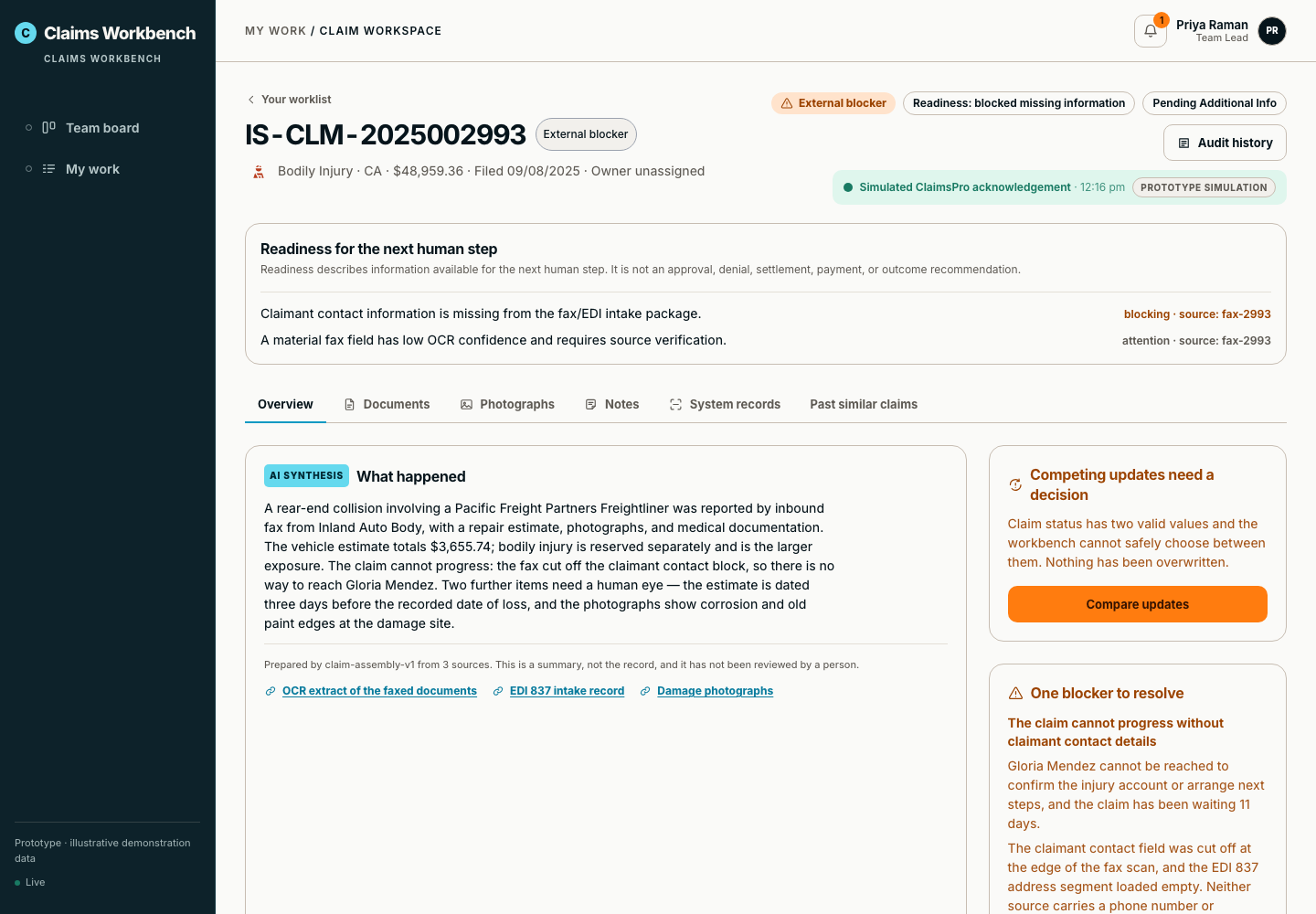
Official status, readiness, blockers, synchronization, evidence confidence, and recommendations remained separate. That lets the interface explain why work is ready or stalled instead of collapsing the process into an opaque score.
What I Did
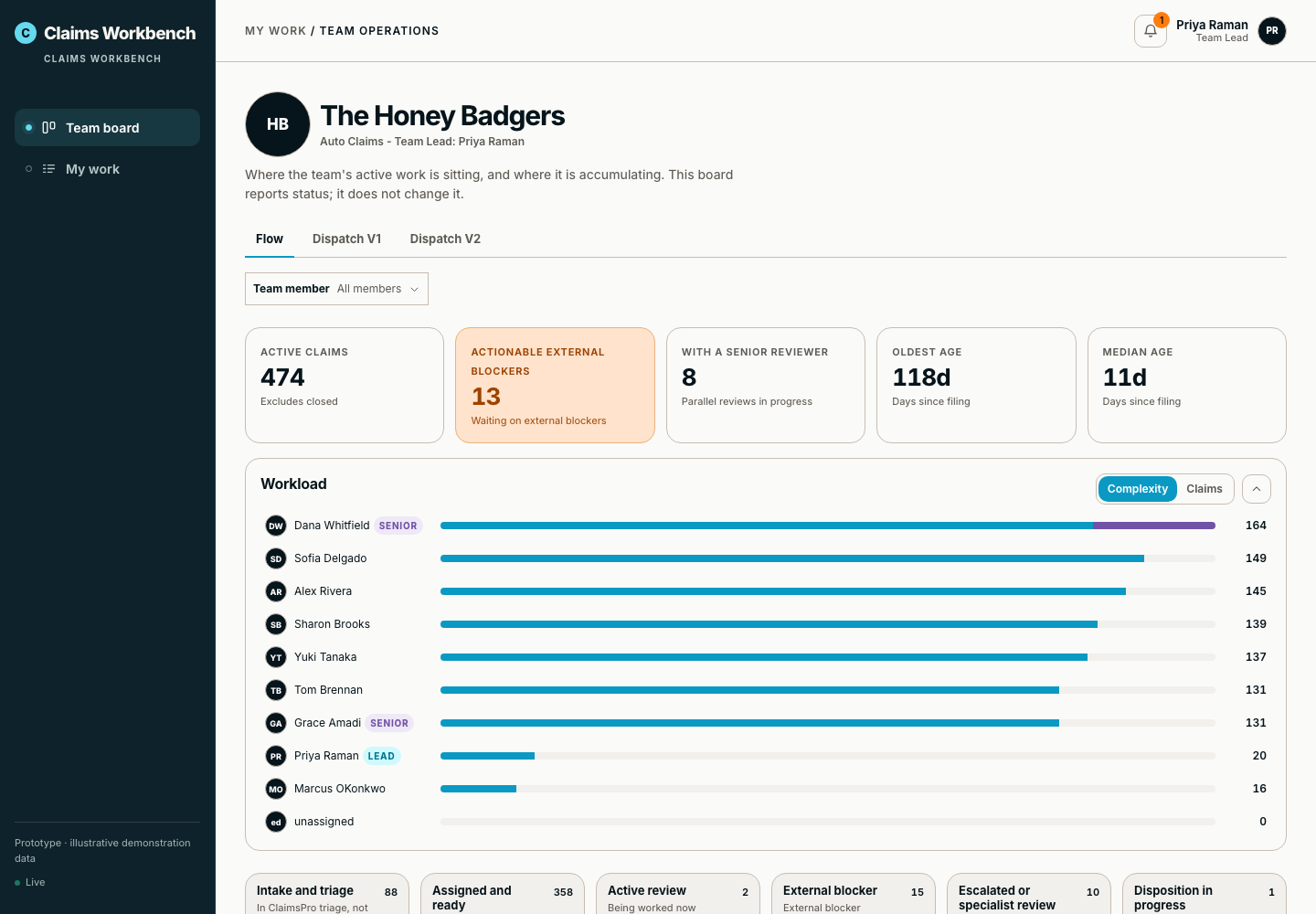
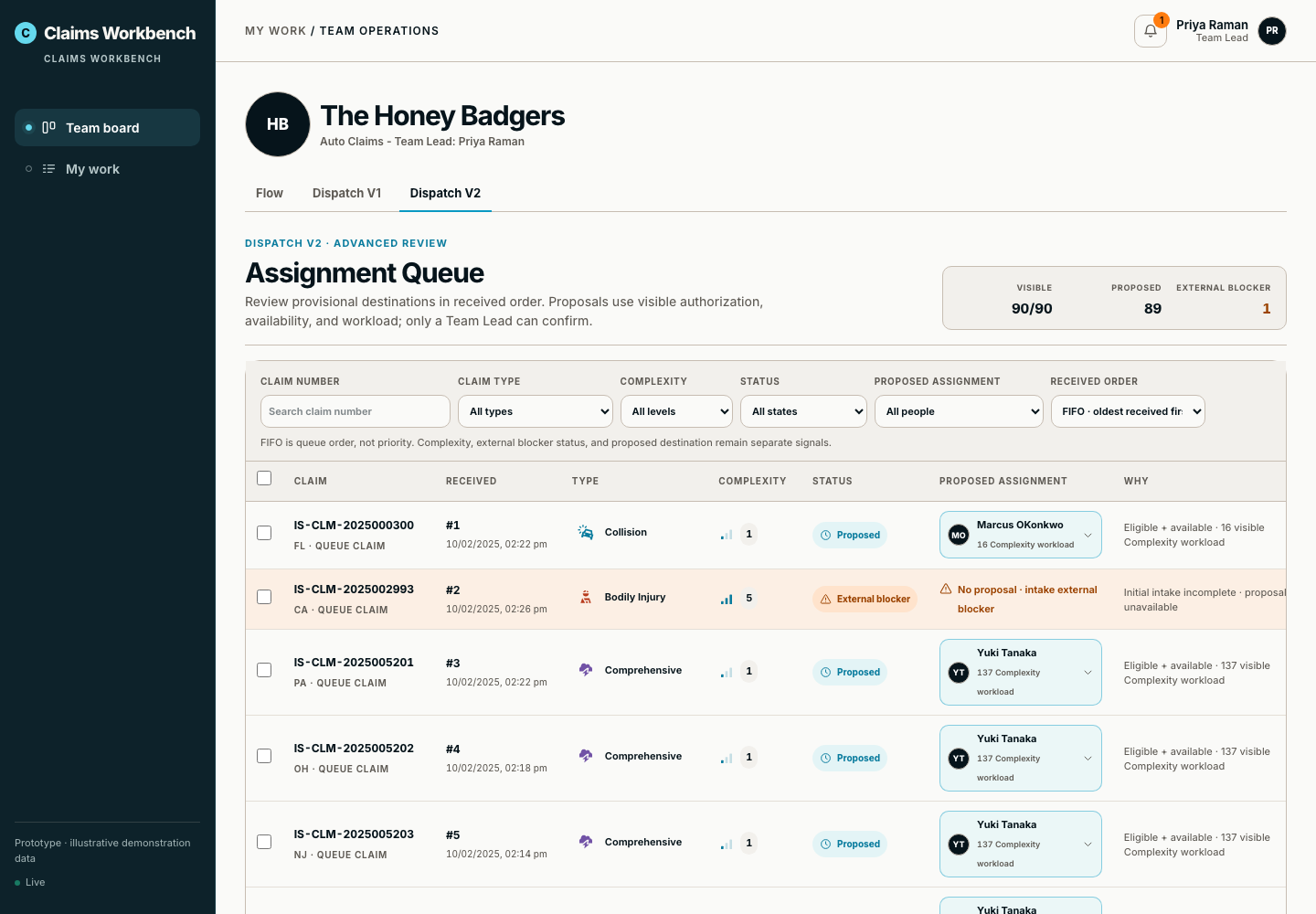
I synthesized the research into a problem model, product direction, decision log, interaction specification, and test plan. I then shaped a stateful workbench spanning the adjuster worklist, team flow, explainable dispatch, claim workspace, blockers, outreach, notifications, and audit history.
Dispatch proposals expose eligibility, availability, and workload. Blocked claims show the missing information and next action. Summaries link back to supporting records, and ownership or claim actions require human confirmation.
The Results
The verified result is a working public prototype backed by a substantial research, decision, design, and implementation record. It demonstrates one coherent loop from finding ready work to inspecting evidence, recording a decision, and continuing the claim.
- A live, credential-free viewer experience at a neutral URL.
- A measurable pilot plan for queue time, recommendation quality, override behavior, and blocked-to-ready flow.
- A human-controlled product hypothesis leaders and frontline experts can test before production investment.
This independently built prototype uses an anonymized, illustrative operating scenario. It has not been deployed into a production claims operation, and no adoption or business-impact result is claimed.