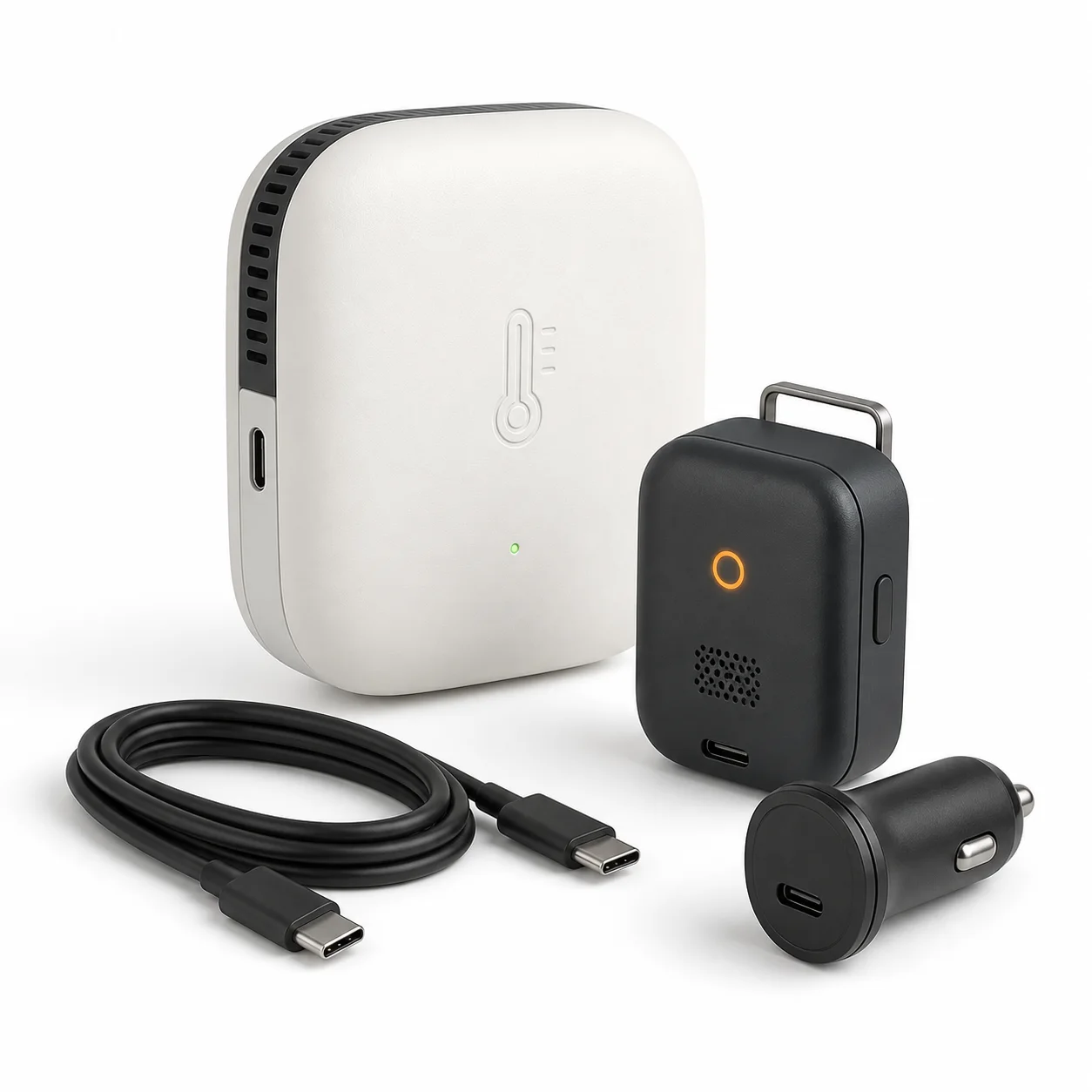
 Product concept · not prototype photography
Building C³ – Connected Cabin Climate from idea to working prototype
I created C³ for my own use, then took it through competitive research, system design, electronics prototyping, and early production planning. The working prototype uses an Arduino Uno R3, off-the-shelf sensors, and LoRa radios; a production version would move to ESP32 for added connectivity redundancy.
Safety boundary: C³ is an independently built, concept-stage product—not a safety guarantee or production-ready specification. Any limited production run depends on further field testing, certification, and commercial validation.
The Challenge
The hard question was not whether temperature sensors, Wi-Fi, Bluetooth, and long-range radio existed. It was whether they could support a focused business and a trustworthy local alert experience without being mistaken for cellular, anywhere-in-the-world monitoring.
Stale readings, lost links, phone background behavior, switched vehicle power, thermal stress, and false confidence about range all had to be treated as first-order product risks.
The Opportunity
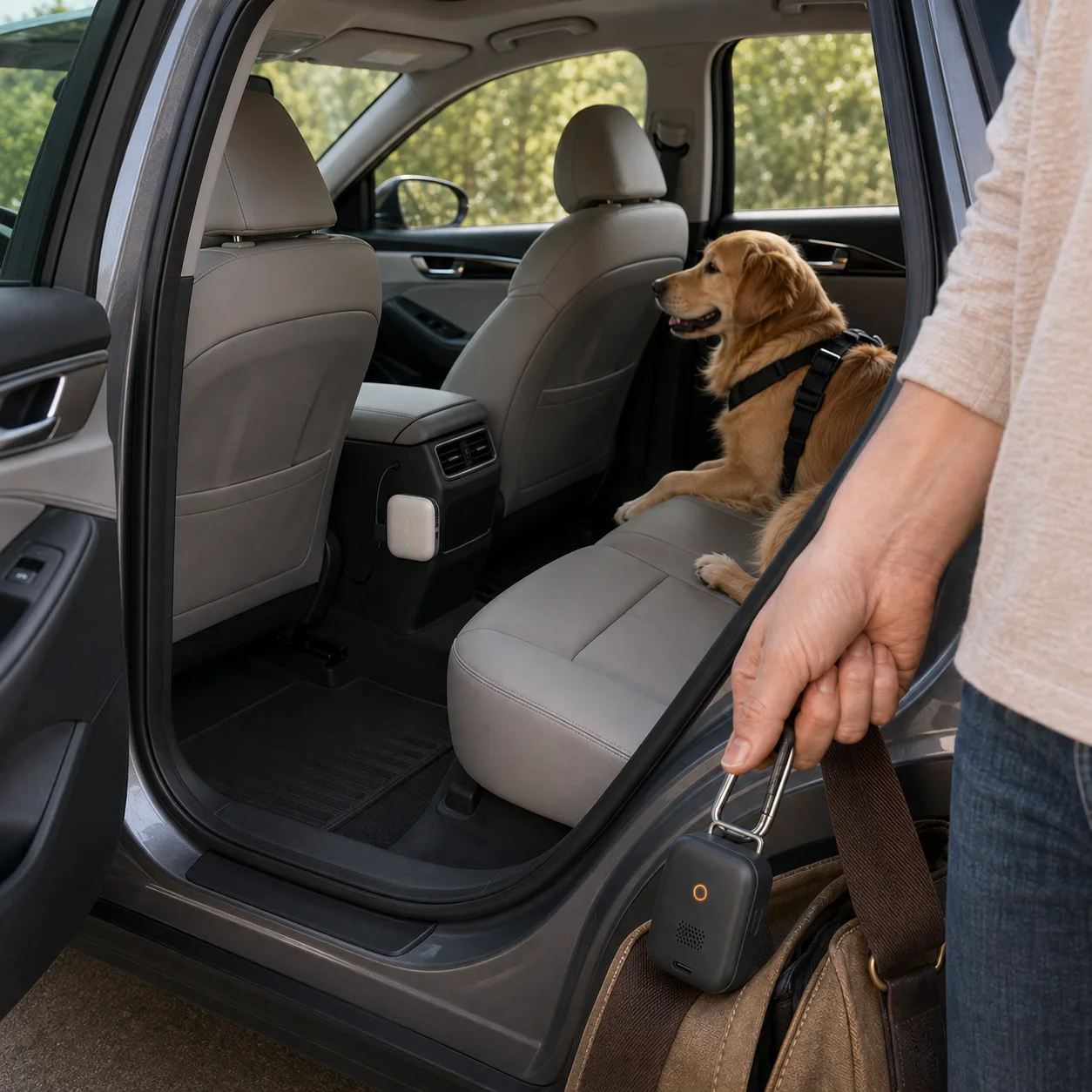
Competitive research showed a credible category, but also a recurring pain point: many alternatives depend on Wi-Fi, cellular service, or a paid plan. I narrowed the initial use case to EV owners who travel with dogs and use parked climate, with adjacent audiences in RV, van, and dog-sport communities.
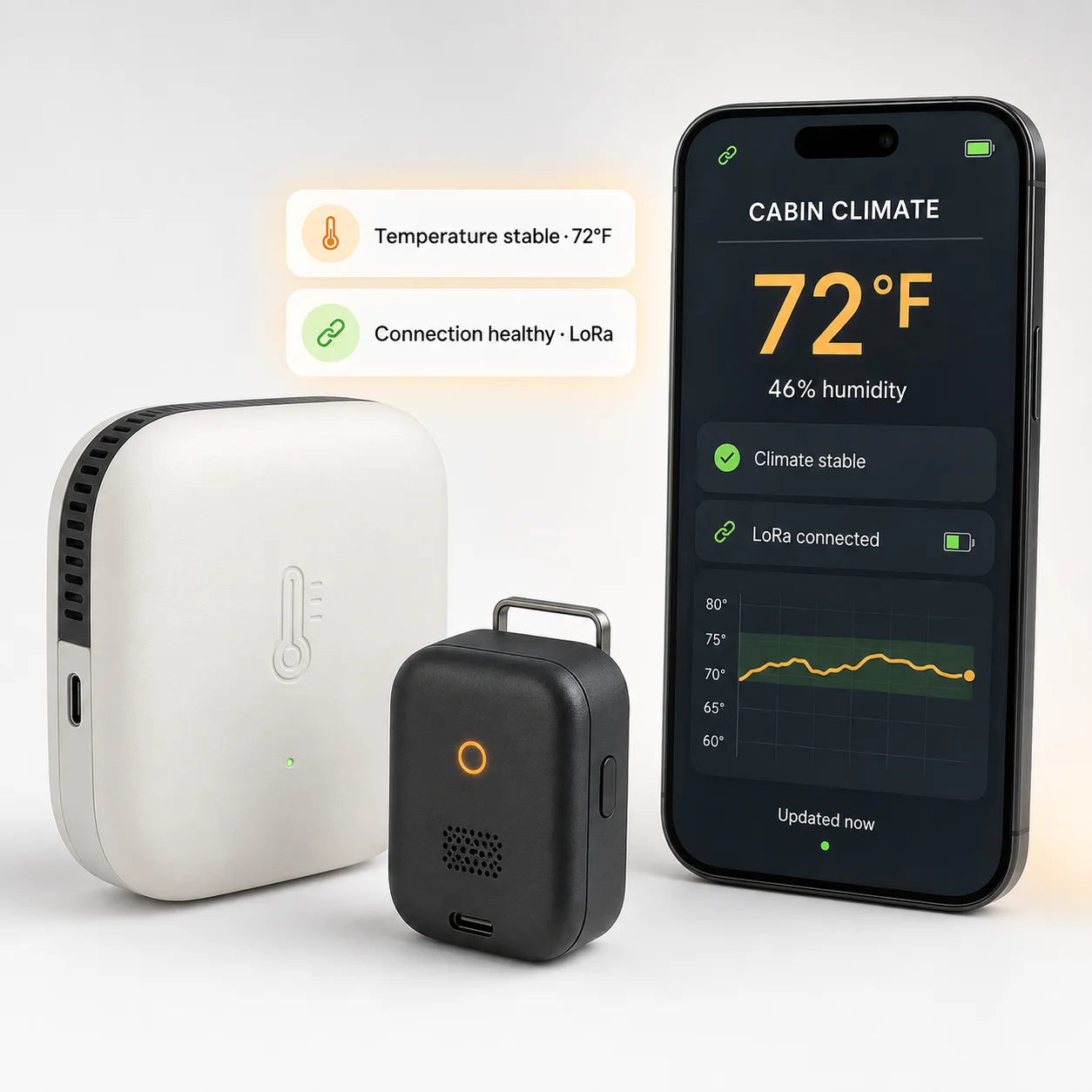
That reframed the product around independent verification of actual cabin conditions. “No required subscription” supports the proposition, but reliability and clear failure behavior are what make it useful.
What I Did
I owned the product end to end: competitive and demand research, price-positioning work, system design, electronics prototyping, physical assembly, and early manufacturing-cost analysis.
I built the first working revision around an Arduino Uno R3, off-the-shelf temperature and humidity sensors, and LoRa radios. For a limited production run, the direction moves to an ESP32-based board so LoRa can be complemented by Wi-Fi and Bluetooth rather than treated as the only connection path.
I estimated manufacturing cost through PCBWay quoting and component-level research. I also translated safety concerns into requirements for lost-link detection, reading freshness, power-state alerts, rapid-rise alerts, pre-departure range testing, self-test, and low-battery warnings.
I evaluated vehicle-provided temperature as a possible simplification. Because that path shares the vehicle’s sensor, software, gateway, sleep state, and power, it remains secondary context while an independent sensor stays close to the pet.
The Results
The project moved from a personal need to a working physical prototype and a grounded limited-production decision. The research connected a focused buyer, competitive price positioning, failure modes, a receiver-led architecture, and estimated manufacturing economics.
- A focused EV pet-owner wedge replaced a broad “monitor anything” proposition.
- A working Arduino-and-LoRa prototype proved the core physical concept.
- An ESP32 production direction adds connectivity redundancy while preserving independent sensing.
- PCBWay and component research established an initial manufacturing-cost model for a possible limited run.
The next decision is whether field reliability and buyer validation justify moving from prototype to limited production.
No launch, adoption, revenue, production certification, guaranteed range, or pet-safety outcome is claimed.